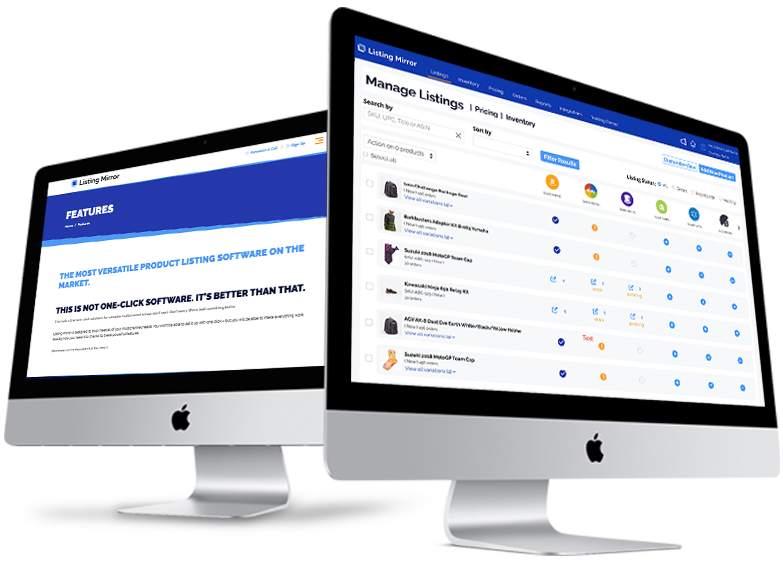
Listing Mirror connects your Reverb shop with Amazon, eBay, Walmart, Shopify, and 10+ channels—so you can list your gear once, sync inventory, and manage orders from one platform. One catalog. One inventory pool. Zero overselling.
Re-entering instruments and gear you already sell on eBay, Amazon, or your own store to list on Reverb wastes hours and invites errors.
Used and vintage pieces are often single-quantity. When one sells on another channel, Reverb needs to update instantly—or you cancel orders and lose trust.
Reverb has its own categories, condition grades, and gear attributes. Reformatting product data to fit them one listing at a time is slow and error-prone.
Toggling between Reverb and every other marketplace dashboard makes it hard to see catalog, inventory, and orders in one place.
Updating titles, prices, and stock on Reverb—then again on every other channel—eats into time you should spend sourcing and selling gear.
Every new listing and every new channel multiplies the manual workload. Without automation, expanding beyond Reverb creates more busywork than it is worth.
Import gear data from eBay, Amazon, Shopify, or any connected channel and create Reverb listings automatically—categories, condition, and attributes mapped without manual rework.
Manage your entire Reverb catalog alongside every other channel in one place. Bulk-edit titles, descriptions, images, and attributes across products and channels at once.
Listing Mirror syncs inventory across Reverb, eBay, Amazon, Walmart, Shopify, and 10+ channels in real time. One sale anywhere instantly updates stock everywhere—crucial for single-quantity gear.
Set pricing rules so your Reverb prices stay competitive without undercutting your other channels. Adjust margins, apply markups, and manage promotions from one place.
Get help from a US-based team that knows multichannel selling inside and out. No scripts, no runaround—just fast answers from people who know the platform.
Track sales, inventory, and order performance across Reverb and every other channel in a single dashboard—so you can make decisions without switching tabs.

Listing Mirror is built for gear sellers who have outgrown managing Reverb on its own. You are a strong fit if you match most of the following.
You list—or want to list—on eBay, Amazon, Walmart, or Shopify alongside Reverb.
Enough instruments and accessories that manual updates have become a time sink.
New and restockable gear, not only true one-off vintage finds.
Able to keep inventory and shipping reliable across channels.
Popular Reverb categories: Guitars & basses · Amps & effects · Keys & synths · Drums & percussion · Pro audio & recording
If that sounds like your shop, Listing Mirror keeps Reverb in sync with everywhere else you sell.
Yes—you will need an active Reverb shop to connect with Listing Mirror. Once connected, you can create and manage Reverb listings alongside all of your other channels in minutes.
Yes. If your gear already lives on eBay, Amazon, Shopify, or another connected channel, Listing Mirror imports that data and builds Reverb listings automatically—mapping categories, condition, and attributes so you do not start from scratch.
Listing Mirror syncs inventory in real time across all connected channels. When a one-of-a-kind item sells anywhere, it comes down on Reverb within minutes—preventing the double-sales that hurt used and vintage sellers most.
Most sellers are fully set up within a few days. Our US-based support team walks you through connecting your Reverb shop, importing your catalog, and configuring inventory and pricing rules.
Our clients not only have great things to say about our service, but have the results to back it up. We work closely with our partnered brands, such as Amazon, to ensure our clients are truly reaping the benefits that Listing Mirror promises.


We get it – before you add a tool to your workflow, you need to make sure it’ll work for your needs. We’re here to help.